
How to Choose the Right Wood for a Custom Kitchen
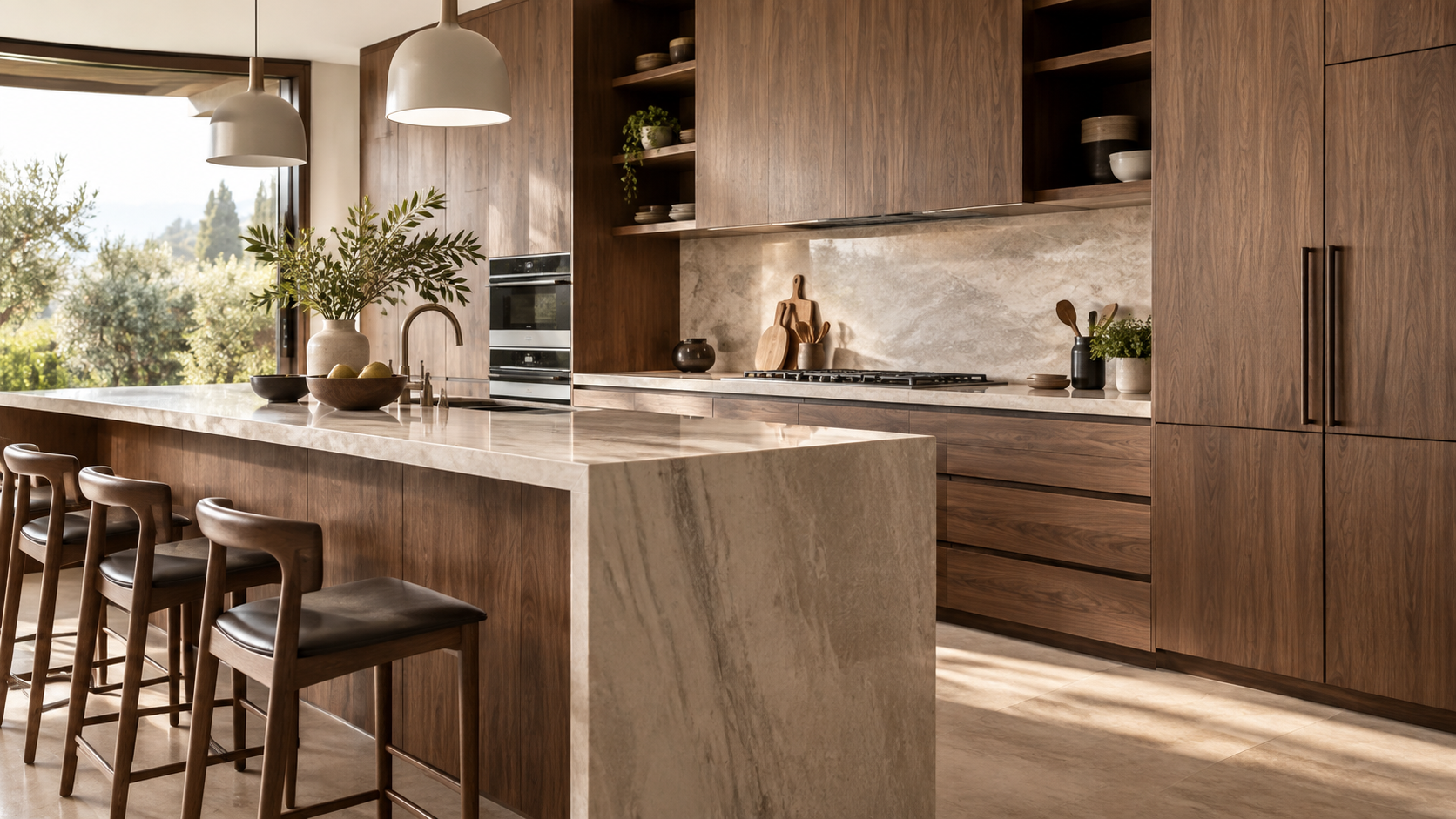
Choosing the right wood for a custom kitchen is about more than selecting a color you like. The material affects the appearance, durability, maintenance requirements and overall cost of the kitchen. It also influences how the space will look as it ages and how well it fits the way the kitchen is actually used.
With a custom kitchen, there is an opportunity to make these decisions before construction begins rather than adapting a standard design to a predetermined material. Understanding the differences between wood and engineered materials can therefore make the design process more practical and predictable.
Why the Choice of Wood Matters in a Custom Kitchen
Kitchen cabinetry is exposed to daily use, frequent opening and closing, cooking activity, cleaning and changes in temperature and humidity. The material needs to work within that environment while also supporting the visual character of the room.
The right choice depends on several factors:
- How the kitchen will be used every day
- The desired appearance and style
- Expected durability and longevity
- Maintenance requirements
- Available budget
- The relationship between cabinetry, countertops, flooring and other interior finishes
There is no single material that is automatically right for every kitchen. A material that works beautifully in one design may be unnecessary, impractical or visually unsuitable in another.
Natural Wood vs. Engineered Materials
One of the first decisions is whether the kitchen should use natural wood, engineered materials, or a combination of different materials.
Natural Wood
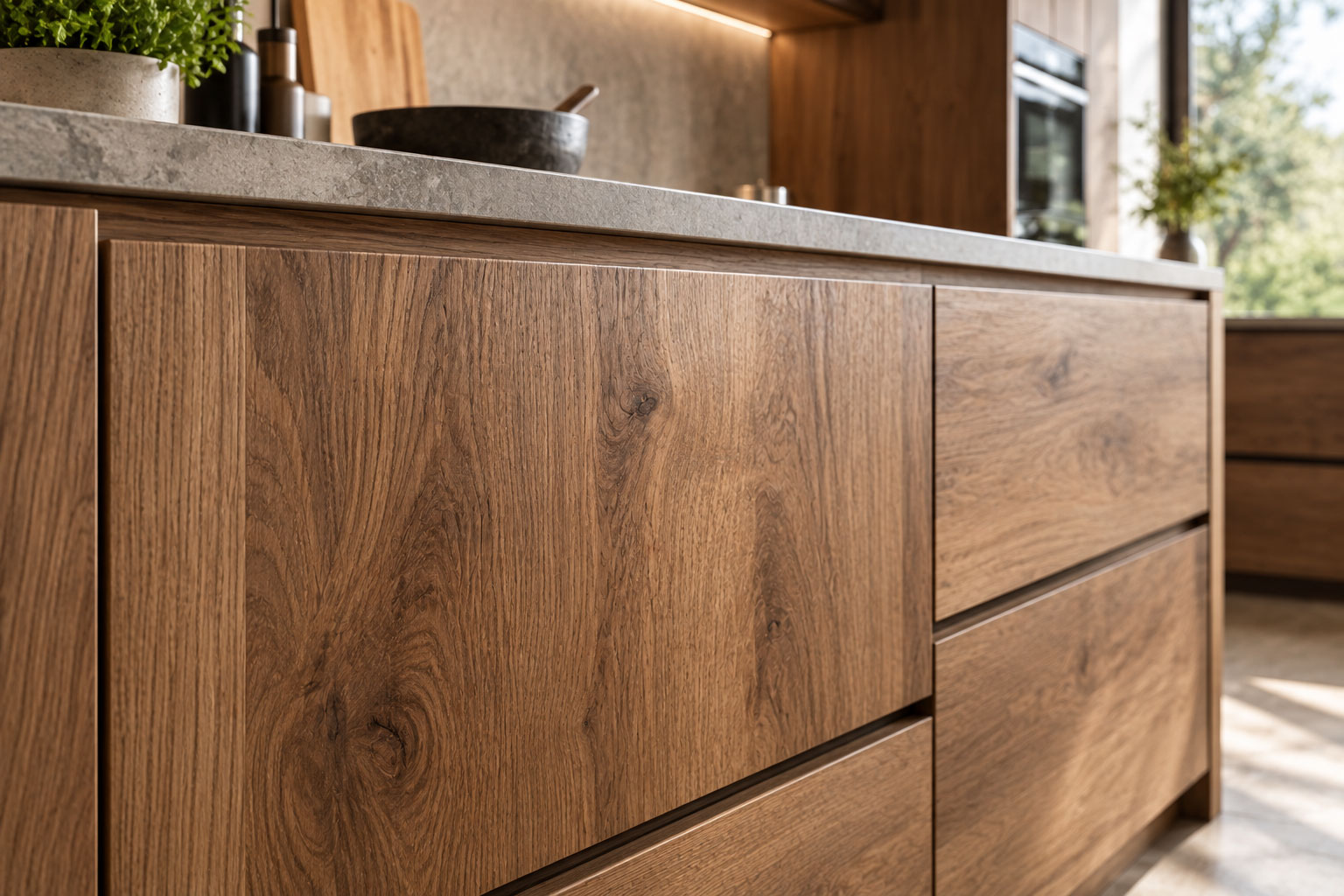
Natural wood brings an authentic grain pattern, texture and variation to a kitchen. Each piece can have subtle differences in color and appearance, which gives the finished cabinetry a distinctive character.
Natural wood can work particularly well when the design calls for warmth, visible texture or a more organic appearance. However, the specific characteristics of the selected wood and its finish should be considered carefully rather than choosing solely on appearance.
Engineered Materials
Engineered materials can provide different combinations of appearance, consistency, performance and cost. They can also make it possible to achieve a particular visual effect without relying entirely on natural solid wood.
For this reason, the question should not simply be whether natural wood is better. The more useful question is which material is appropriate for each part of the kitchen and for the way the space will be used.
Consider the Appearance of the Wood
Appearance is often the first thing homeowners notice, but it should be considered in relation to the entire interior.
Look at the following characteristics:
- Color: Consider whether the wood should create warmth, contrast with lighter surfaces or blend into the overall interior.
- Grain: Grain direction and visibility can have a major effect on cabinet fronts and large surfaces.
- Texture: Different surfaces can create very different visual impressions even when similar colors are used.
- Finish: The selected finish can influence the final color, sheen and feel of the material.
It is also important to consider how the wood will interact with countertops, walls, flooring, appliances and lighting. A sample that looks attractive on its own may produce a very different result when used across an entire kitchen.
Think About Durability and Everyday Use
A kitchen is not simply a display space. Cabinet doors, drawers and work areas may be handled dozens of times every day. The material therefore needs to be considered in the context of actual use.
Ask yourself how heavily the kitchen will be used and which areas will experience the most contact. A family kitchen used throughout the day may have different material priorities from a kitchen that is used occasionally.
It is also worth considering the environment around the cabinetry. Cooking introduces heat, moisture and frequent cleaning, so material selection and finishing should be discussed as part of the overall kitchen design rather than treated as a purely decorative decision.
Budget: Do Not Look Only at the Price of the Material
The material is one part of the total cost of a custom kitchen. The design, manufacturing, construction and finishing of the cabinetry also contribute to the final result.
A more expensive material is not automatically the most appropriate choice. In some kitchens, investing in a particular visible feature may make more sense than using the same material throughout every cabinet.
A thoughtful material plan can therefore balance appearance, performance and budget. For example, different materials or finishes may be considered for different parts of the kitchen where appropriate.
Common Mistakes When Choosing Kitchen Wood
Choosing Only by Color
A color may look perfect in a sample but fail to work with the rest of the interior. Always consider the complete kitchen rather than the cabinet material in isolation.
Ignoring Maintenance
Everyday use should be considered before selecting a material and finish. Ask what type of cleaning and care the finished surfaces will require.
Focusing Only on the Initial Cost
The cheapest option is not necessarily the most suitable, while the most expensive option is not necessarily necessary. The goal is to find an appropriate balance between the intended appearance, durability, use and budget.
Choosing Before Understanding the Design
Material selection should work together with the kitchen's layout and overall interior design. Choosing the material too early without understanding the complete design can make later decisions more difficult.
How to Compare Wood Options Before Making a Decision
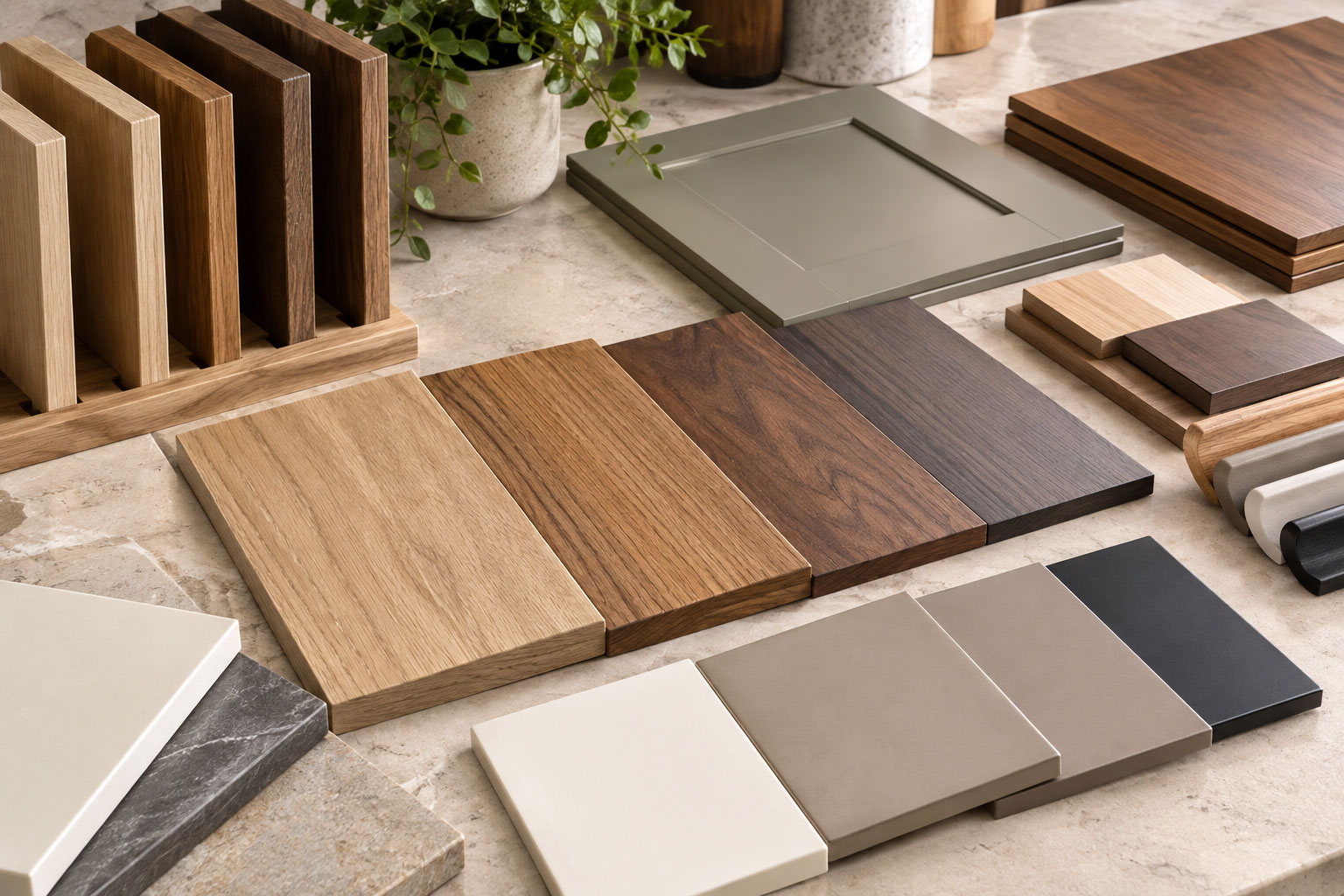
Before committing to a material, compare actual samples rather than relying only on photographs or small digital images.
Look at each option under the lighting conditions that will be present in the kitchen and compare:
- Color and tone
- Grain pattern
- Surface texture
- Finish and sheen
- Expected maintenance
- Suitability for everyday use
- Overall cost
It is also useful to view larger samples. A small sample can hide how a particular grain or color will appear when repeated across multiple cabinet doors and larger surfaces.
Maintenance and Long-Term Considerations
Good material selection should take future maintenance into account from the beginning. Kitchen surfaces are regularly exposed to fingerprints, food particles, moisture and cleaning.
The exact care required depends on the material and finish, so maintenance requirements should be discussed before the final selection is made. A kitchen that looks excellent on installation day should also remain practical for the people who will use it every day.
How Atalag Can Help
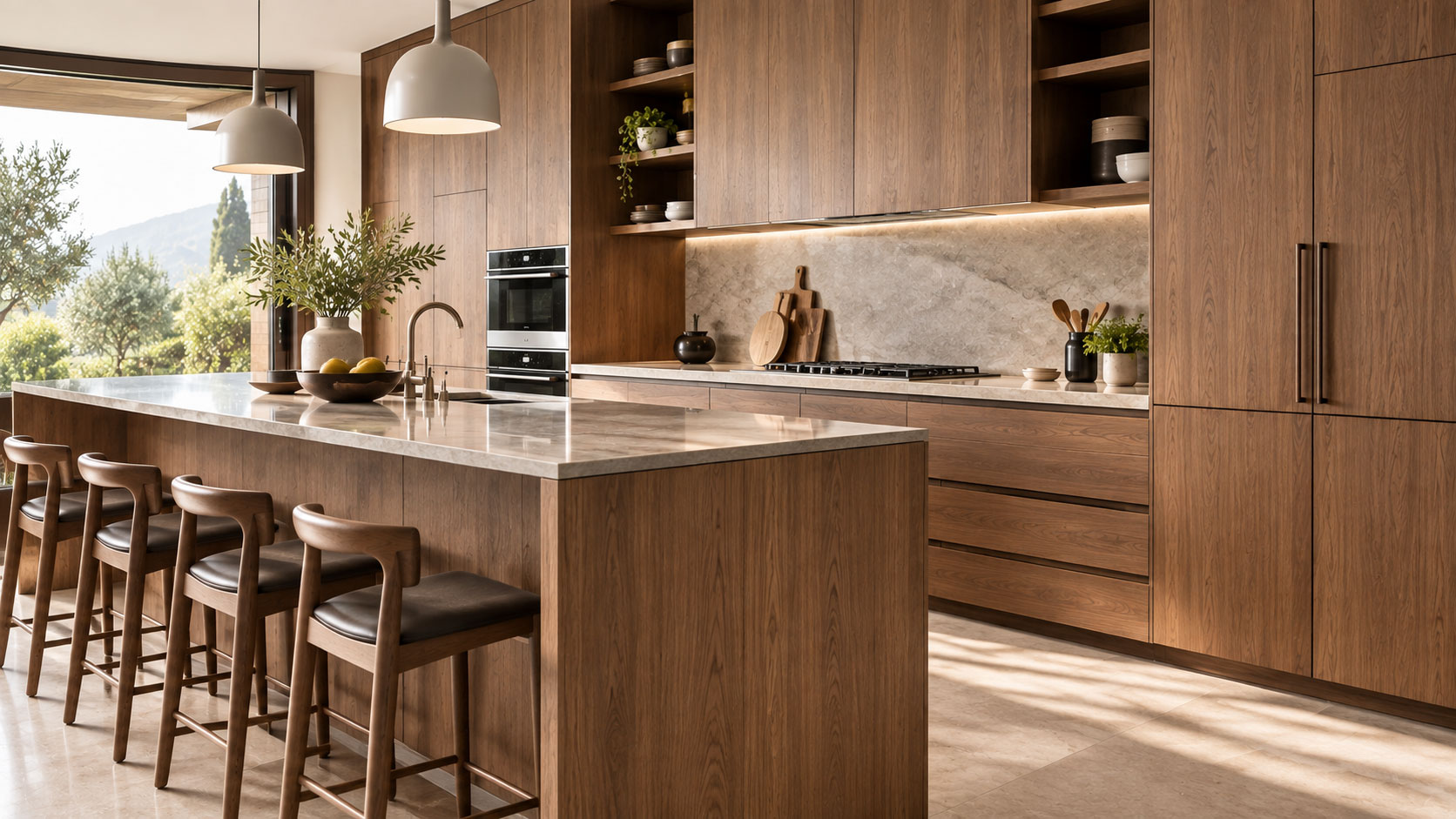
Atalag designs and manufactures custom kitchens using different wood and engineered materials. The material selection can be considered according to the appearance, durability, budget and intended use of the kitchen.
Rather than treating material selection as an isolated decision, Atalag can help clients choose an appropriate option as part of the custom kitchen design and manufacturing process.
Frequently Asked Questions
What is the best wood for a custom kitchen?
There is no single best wood for every custom kitchen. The appropriate choice depends on the desired appearance, durability, budget and how the kitchen will be used.
Is natural wood suitable for kitchen cabinets?
Natural wood can be suitable for kitchen cabinetry, but the specific material, finish, expected use and maintenance requirements should all be considered before making a decision.
Should I choose natural wood or engineered materials for my kitchen?
Both can have a place in a custom kitchen. The right option depends on the desired appearance, performance, budget and requirements of the specific design.
Does the wood finish matter in a custom kitchen?
Yes. The finish can affect the appearance and surface characteristics of the cabinetry. It should therefore be considered together with the selected material rather than as a completely separate decision.
How do I choose kitchen cabinet materials on a budget?
Start by defining the desired appearance and practical requirements, then compare material options according to cost, durability, maintenance and how prominently each material will be used in the kitchen.
Should I compare wood samples before choosing a kitchen material?
Yes. Comparing physical samples can make it easier to evaluate grain, color, texture and finish and to understand how the material may work with the other elements of the kitchen.
Conclusion
Choosing the right wood for a custom kitchen is a balance between design and practicality. The most suitable material is not necessarily the most expensive or the most visually striking. It is the one that fits the kitchen's intended use, desired appearance, maintenance expectations and budget.
By comparing materials carefully and considering how they will work within the complete kitchen design, you can make a more informed decision and create a space that remains practical and visually appropriate over time.
If you are planning a custom kitchen, Atalag can help you explore different wood and engineered material options based on the appearance, durability, budget and use you have in mind.